


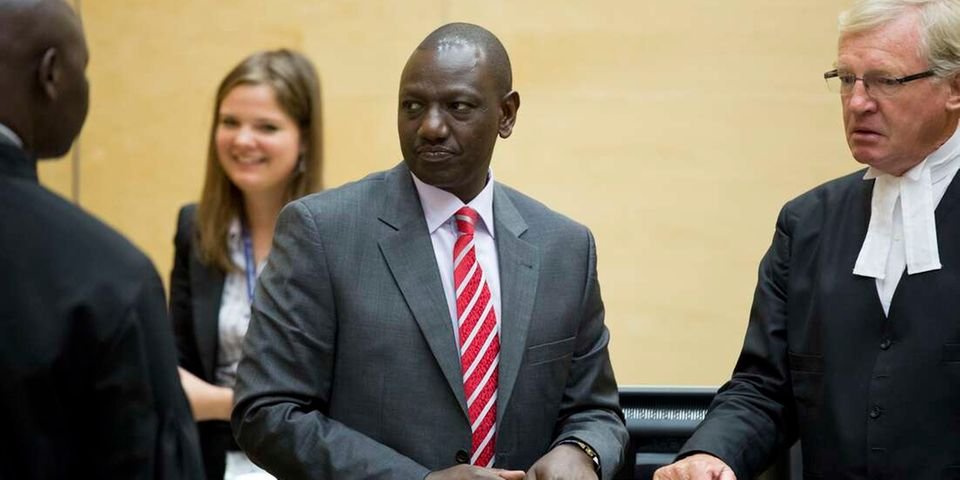
William Ruto at the ICC in The Hague in September 2013. Whether the DP is in danger of being summoned again by the ICC will be known after the Paul Gicheru case.
When Kenyan lawyer Paul Gicheru surrendered at The Hague on November 2, 2020 the move took many—including his lawyers— by surprise. The prosecution’s final paper says on the day he was interviewed by the Prosecutor, Mr Gicheru was “nervous, evasive, and failed to maintain eye contact. He was looking around while speaking or taking long pauses before responding to questions”.
Today, focus will be on the prosecution as it closes a case that could determine the fate of Deputy President William Ruto, regarded by the prosecution as the beneficiary of the common scheme that included bribery and intimidation.
By using phone voice recordings of Mr Gicheru seducing witnesses, bank records and oral testimony, the ICC prosecutors think they have finally found one of the men who derailed the Ruto case at The Hague by corrupting witnesses.
Also Read: ICC prosecutors close case against lawyer Paul Gicheru
But whether the DP is in danger of being summoned again by the ICC will be known after the Gicheru case.
Cases dismissed
Following the post-election violence of 2007/8 in which about 1,200 people were killed, Mr Ruto was accused of murder, deportation and persecution. The separate case against President Kenyatta was dismissed for lack of evidence.
Mr Kenyatta was charged with crimes against humanity, of murder, deportation or forcible transfer, rape and other forms of sexual violence, other inhumane acts and persecution. He was charged as indirect co-perpetrator. His charges were, however, withdrawn in 2014 due to insufficient evidence.
However, Mr Ruto was set free on April 5, 2016 after many key prosecution witnesses either dropped or changed their original statements.
In the case, Judge Eboe-Osuji (the presiding judge) and Judge Robert Fremr were in the majority and agreed that the evidence presented in the prosecution case was weak and that the case should be terminated as a result; but that a judgment of acquittal should not be entered
The then ICC prosecutor Fatou Bensouda acknowledged that the loss of witnesses weakened the case and that this was the result of interference by members of a common scheme.
Members of the scheme
Prosecution has named the members of this scheme to have included Mr Ruto, as the beneficiary, while Mr Gicheru, Mr Silas Simatwo and Mr Isaac Maiyo were the managers. While Mr Simatwo was a director of the Ruto-owned Amaco Insurance, Mr Maiyo was the chairman of Eldoret North Constituency Development Fund. The intermediaries between the managers and prosecution witnesses were Mr Meshack Yebei, who was later kidnapped and killed, journalist Walter Barasa, and Mr Phillip Bett. The work of the intermediaries was to “convey threats of adverse consequences” and “negotiate the amount and terms of bribes”.
The prosecution had initially sought a warrant for Yebei’s arrest, but withdrew its request after the former human rights worker was killed and dumped in Tsavo National Park by unknown people. On March 10, 2015, the court requested Kenya to surrender Mr Bett, who was Yebei’s childhood friend. With Mr Barasa having a warrant issued on August 2, 2013, it means that the only three members of the scheme—DP Ruto, Mr Simatwo and Mr Maiyo—have no warrants of arrest.
From his Veecam House office in Eldoret town, Mr Gicheru is said to have directed the activities of these intermediaries “leveraging his influence as a prominent member of the community and the legal profession to advance the aims of the Common Plan.”


